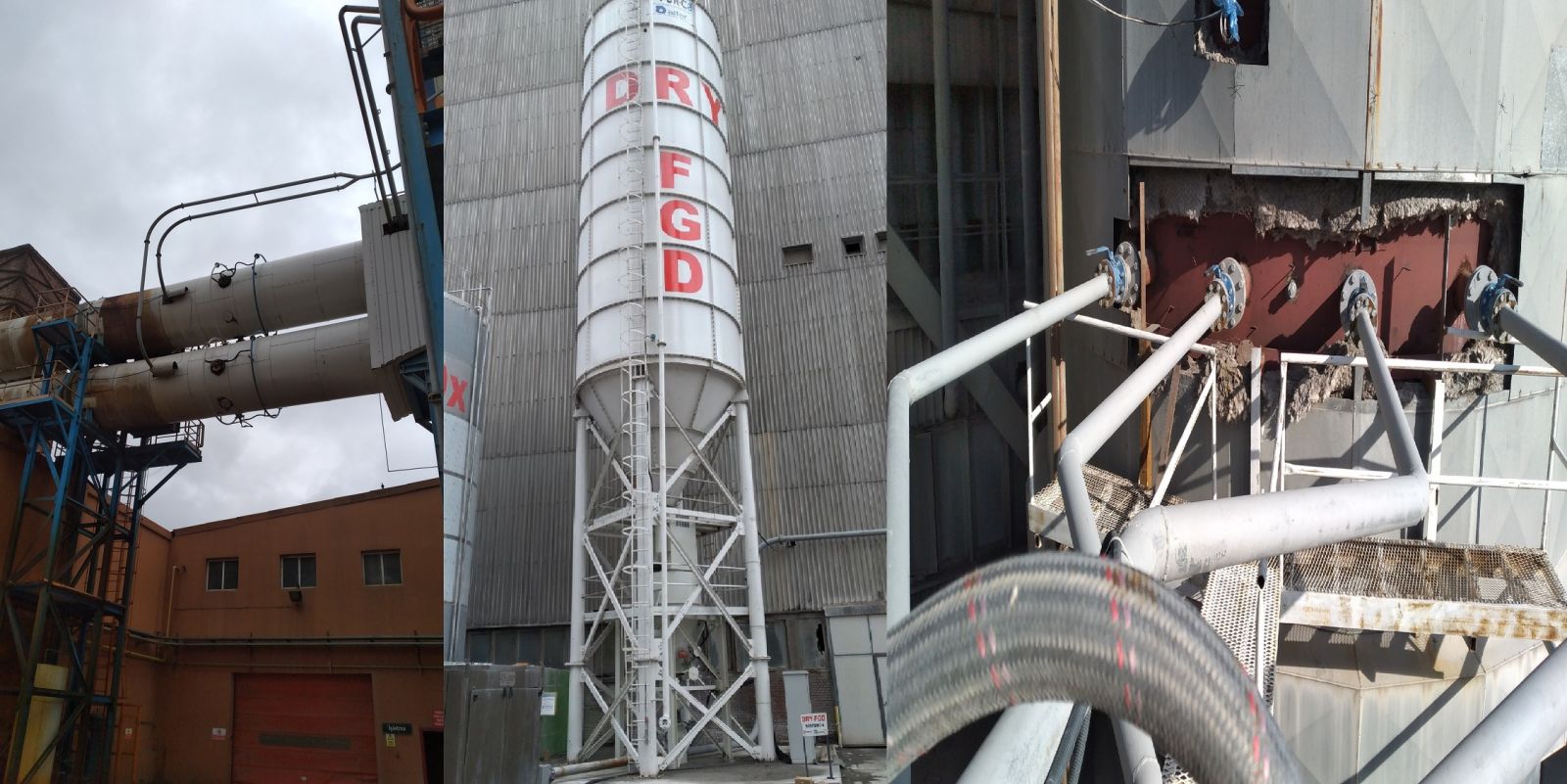
  After the gas at the boiler outlet is diverted from the SO2 path, it is difficult to react with the gases in the filtered line 120-150 C quality
targeted transition. Turning into a reaction product of Kali sulfate CaSO4 (Gypsum) and CaSO3 (Calcium sulfide) in the bag filter.

     Unreacted review, on the other hand, is more functional against SO2 than fresh lime and life in filter bunkers with re-use; It is not
transported to the Intermediate Silo, which is the weighing system, and is applied before the ashing injection to be re-inflated.
It can be used for products below 30% fresh to the flue gas line for efficient use of SO2 reaction. In this way, the use of fresh lime is also
reduced.

     In addition, the event is reached by lightning with SO3 (calcium sulfide), which has not been converted to CaSO4 or some
 air receiver, by one means of a ash silo.
.png)

Sodium bicarbonate is a chemical compound that is widely produced in our country and its chemical formula is NaHCO3. It is one of the sodium
salts and has anti-acid properties.

      Sufficiently micronized sodium bicarbonate ensures effective reduction of acid pollutants in the flue gas formed after combustion.
Although the use of sodium bicarbonate in this area is not well known in our country, its use is very common especially in Europe and America.
The use of sodium bicarbonate in flue gas cleaning takes place in the form of dry sorbent injection. A reaction time of 2 seconds is required
for sodium bicarbonate on a dry basis to capture the acids in the waste gas.

      Sodium bicarbonate (NaHCO3) transforms into sodium carbonate (Na2CO3) at temperatures above 140-200 °C, resulting in water (H2O)
 and carbon dioxide (CO2) as a result of the chemical reaction.